How Can Education Turn Toward Students' Needs?
By Luis Eduardo Azevedo
Popular education is based on the idea that knowledge only gains meaning when it engages with people’s concrete realities. Inspired by Freirean pedagogy, it proposes an approach to education that recognizes individuals as capable of critically interpreting the world, in contrast to the passivity traditionally assigned to students. From this perspective arises the question that shapes my work as a high school student and educator in training: how can education truly turn toward students’ realities? My engagement with this question came through two projects developed in Rio de Janeiro, in partnership with my classmates Diego Saraiva, Renzo Ajus, and Eduardo Picone: Project Atena and the Sellos Meirelles Azevedo Institute (ISMA). Atena organizes weekly meetings with 30 public school students, focused on preparation for entrance exams to secondary education. ISMA works in financial education, aiming to expand workers’ autonomy and strengthen their understanding of the economy in which they participate. In Atena, test preparation is never an end in itself. Studying becomes a space for expanding horizons: access to new resources, reflection on future paths, and the development of personalized ways of learning tailored to each student. In ISMA, financial education is treated as a critical tool, grounded in participants’ experiences, to deepen understanding of the economy and promote more informed decision-making. In both initiatives, topics emerged from concrete needs identified through direct engagement with participants. In Atena, this is reflected in over 90% class attendance and consistent engagement. In ISMA, seeing workers better allocate their savings demonstrated that the initiative was meeting a real need. In both cases, knowledge gains meaning when it is directed toward community impact. Teaching comes to mean creating conditions for others to recognize themselves as social agents, capable of understanding and transforming their reality. In this way, education reaffirms itself as a political and human act, committed to social transformation. About the author: 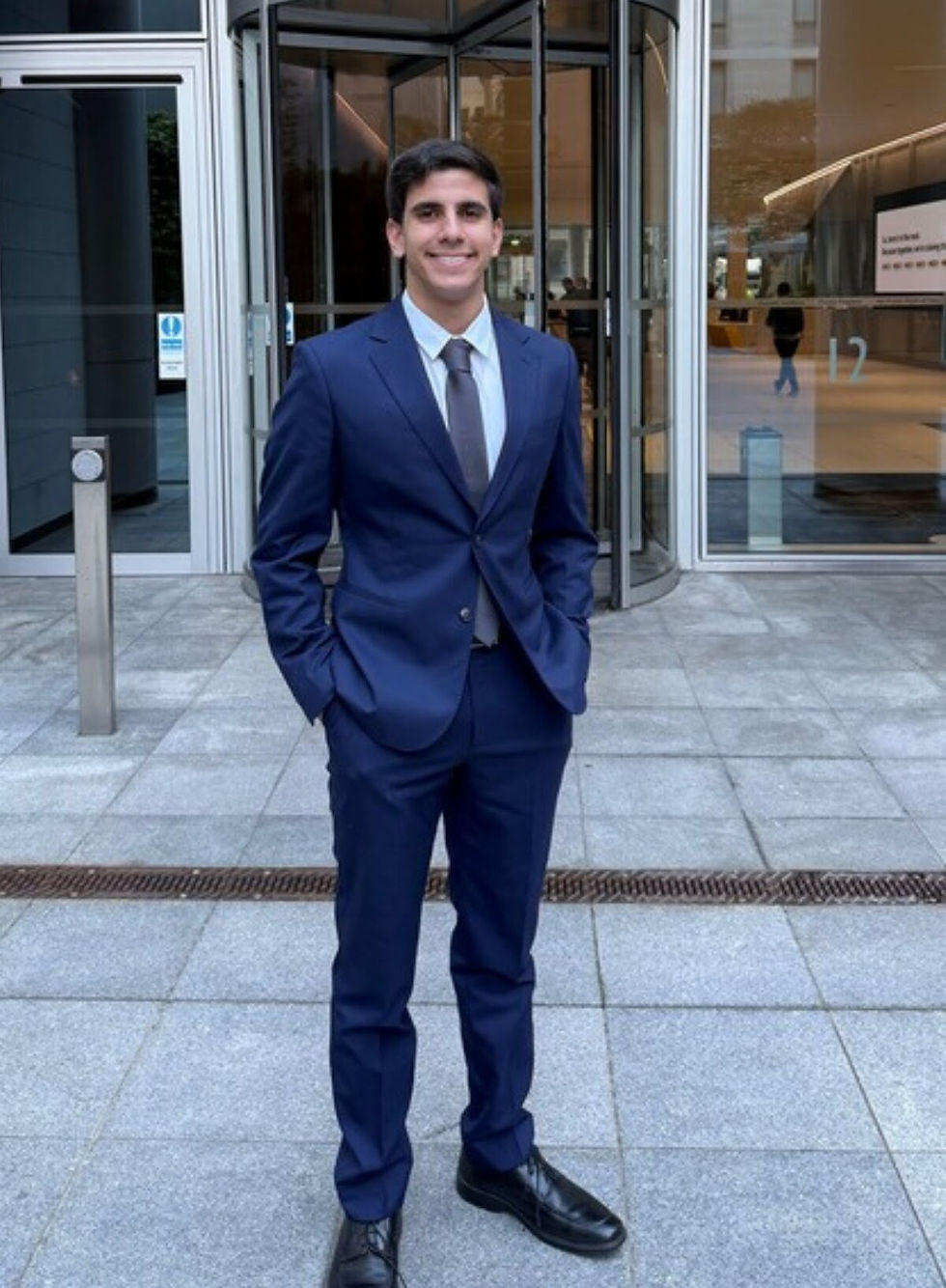 Luis Eduardo Azevedo, 18, is a young man from Rio de Janeiro who recently graduated from high school at Colégio Santo Agostinho, where he co-founded Project Atena and the Sellos Meirelles Azevedo Institute. In 2026, he will begin his studies in Economics and Earth Sciences at Cornell University. His work focuses on initiatives related to education, development, and social impact. |


Comments